Why Your Pool Turns Green After a Florida Storm (And How to Fix It)
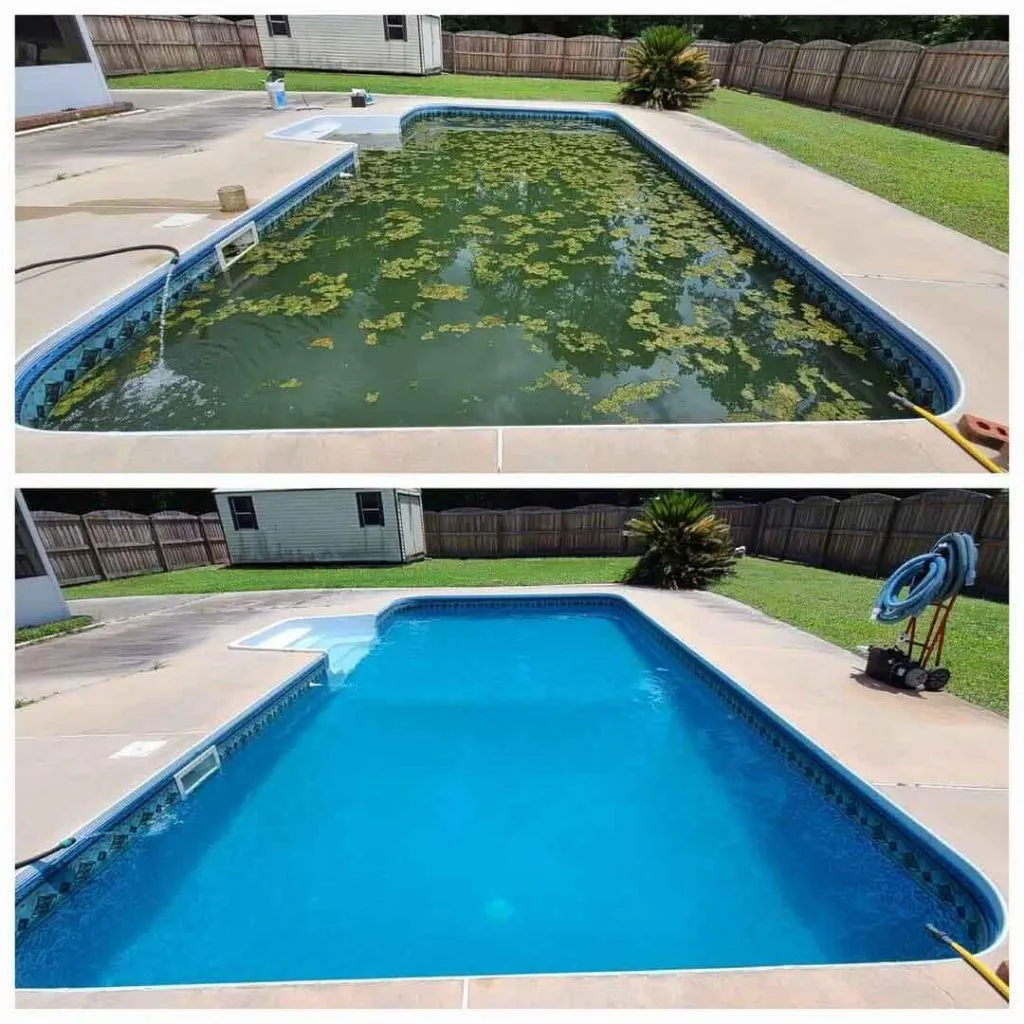
You went to bed with a blue pool, a thunderstorm rolled through Ormond Beach overnight, and you woke up to a swamp. Here is exactly why that happens—and why it's not just "rainwater."
It's Not Just Water: What Rain Really Brings
Many homeowners think rain dilutes their chlorine, and that's true to an extent. But in Volusia and Flagler counties, rain brings three specific enemies that algae loves:
Phosphates (Fertilizer)
Storm runoff washes fertilizer from your lawn (and your neighbor's) into the pool. Phosphates are essentially "algae super-food."
pH Disruption
Rainwater is acidic (pH 5.0-5.5). It lowers your pool's pH, which can destabilize your chlorine's ability to fight bacteria.
The "Nitrogen Bomb"
Lightning storms actually create nitrogen in the atmosphere, which is carried down by rain. Algae thrives on nitrogen. When you combine nitrogen from the sky with phosphates from the ground, you create a perfect biological cocktail for an algae bloom.
How to "Storm-Proof" Your Pool
You can't stop the rain, but you can stop the green. Here is our protocol for storm season:
- Pre-Shock: If you know a hurricane or tropical storm is coming, add a preventative dose of liquid chlorine beforehand.
- Lower the Water Level: If the pool overflows, you lose your stabilizer (CYA). Drain it slightly (but not too much!) before the storm hits.
- Test Immediately After: Don't wait 3 days. Test your pH and chlorine the moment the rain stops.