
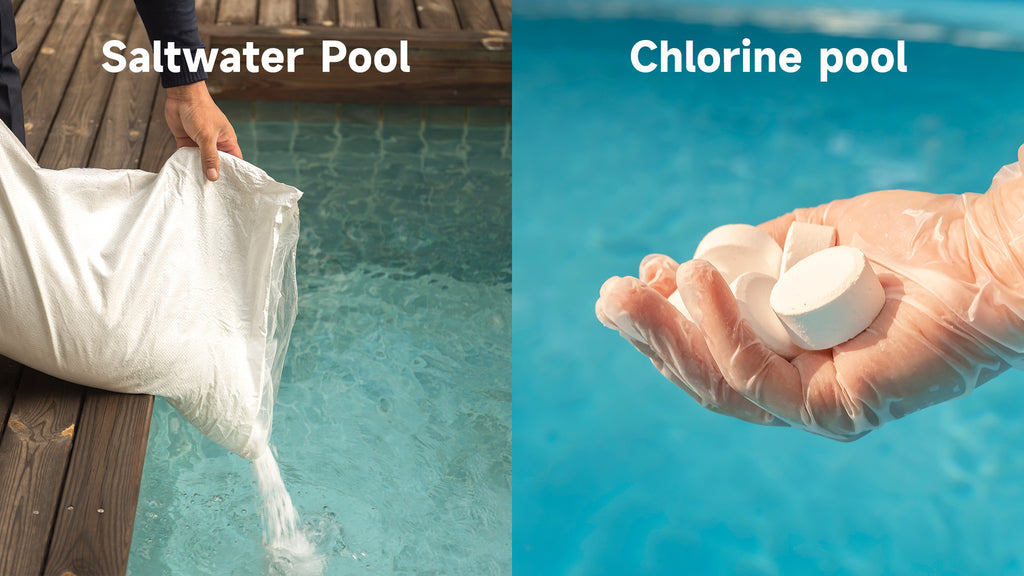
Salt Water vs. Chlorine Pools:
The Ultimate Florida Guide
One of the most common questions we get from new pool owners in Ormond Beach and Palm Coast is: "Should I convert to salt?" It's a hot topic, and there's a lot of misinformation out there. Let's clear the water.
The Big Myth: "Salt Pools Don't Use Chlorine"
Let's start with the most important fact: A salt water pool IS a chlorine pool.
Instead of adding liquid chlorine or tablets manually, a salt pool uses a piece of equipment called a Salt Chlorine Generator (SWG). This device uses electrolysis to turn dissolved salt into pure chlorine gas. This chlorine sanitizes your water just like the liquid stuff, then reverts back to salt to be used again. It's a continuous, self-sustaining cycle.
Salt Water Pools
- Softer, silkier water feel
- No "chlorine smell" or red eyes
- Lower annual chemical costs
- Higher upfront equipment cost ($1,500+)
- Salt cells need replacing every 3-5 years
Traditional Chlorine
- Low upfront cost (no expensive equipment)
- Simple to operate and understand
- Equipment lasts longer (less corrosion)
- Harsh on skin, hair, and swimsuits
- Requires weekly purchasing/hauling of chemicals
The "Feel" Factor
This is the #1 reason people switch. Salt water feels softer on your skin. Because the salt level is roughly equivalent to a human teardrop (about 3,000 ppm, compared to the ocean's 35,000 ppm), it doesn't sting your eyes.
Traditional chlorine pools often have chloramines—the byproduct of chlorine fighting contaminants. That "pool smell" everyone hates? That's chloramines. Salt pools produce a steady, pure stream of chlorine that prevents chloramines from building up, resulting in odorless, crystal-clear water.
Cost Comparison: The Florida Reality
In Florida, our pools are open year-round, which means year-round chemical usage.
- Upfront: A complete salt system installation typically ranges from $2,000 to $4,500, depending on your pool size and automation needs.
- Ongoing: While you save on weekly chlorine purchases, the cost of salt and acid balancing is still a factor.
- The Catch: The "salt cell" (the part that generates chlorine) wears out and needs to be replaced every 3-5 years, with replacement costs around $1,800 installed.
The Verdict: Over a 10-year period, the costs are roughly equal. You don't buy a salt system to save money; you buy it for the experience.
Which is Right for You?
Choose Salt If:
- You have sensitive skin or young children who swim daily.
- You hate handling and storing hazardous chemicals.
- You want the most luxurious swimming experience possible.
Stick with Chlorine If:
- You have natural stone coping (travertine/limestone) that isn't sealed (salt can erode soft stone).
- You want to minimize upfront equipment costs.
- You have a metal heater or older equipment (salt is corrosive to metal).